
A Clockwork Orange: When Violence is Beauty

I first saw A Clockwork Orange illegally.
At the time, it was almost mythical. Technically, it wasn’t banned, but Stanley Kubrick withdrew it himself, after reports of copycat crimes, pressuring Warner Bros to pull it from circulation. In Britain, you could not legally watch A Clockwork Orange until after Kubrick’s death in 1999. That gave it an aura of forbidden art, and for me, it became something almost sacred. The film was not just controversial. It was dangerous.
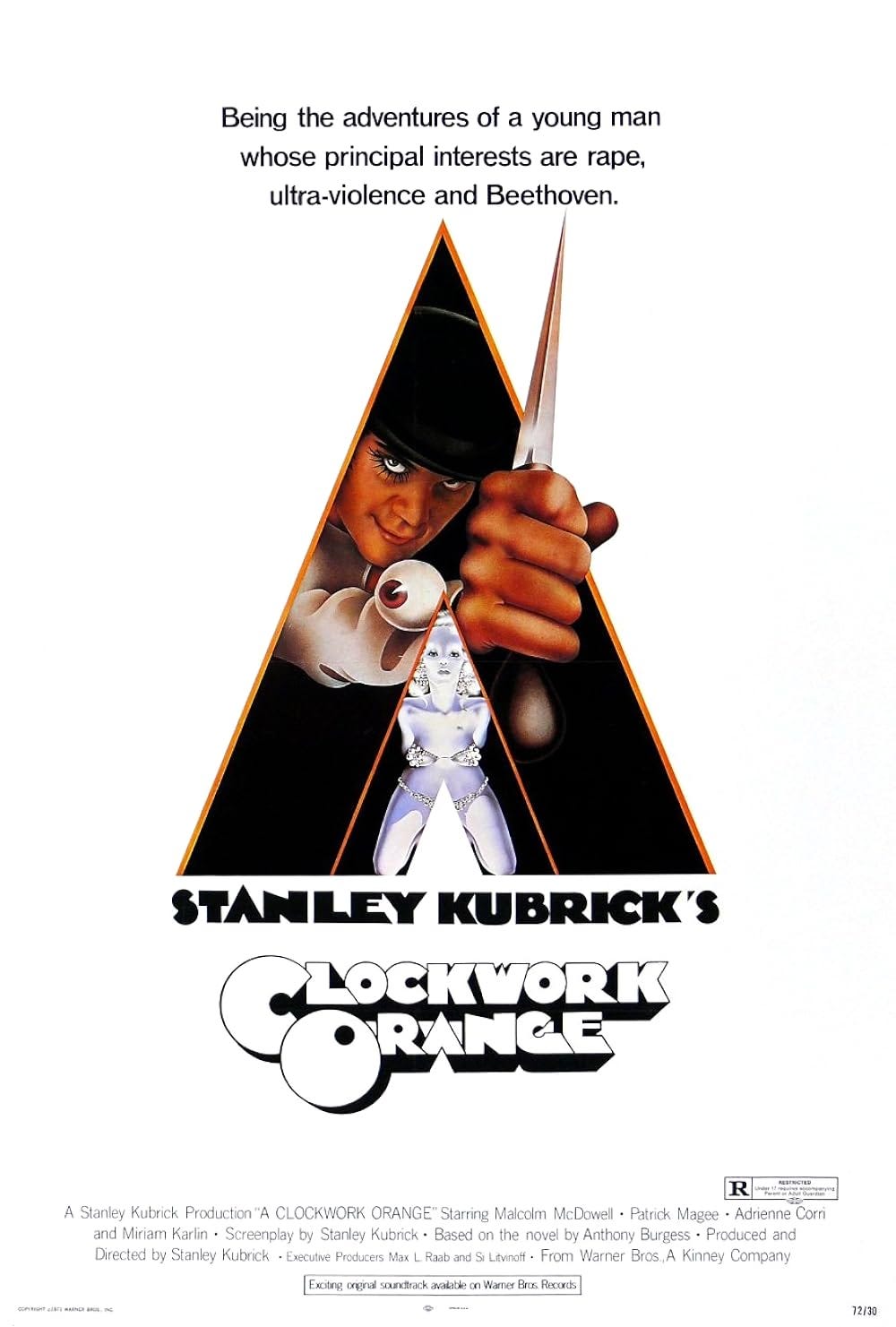
Image: Official theatrical poster for A Clockwork Orange (Warner Bros., 1971). Artwork by Philip Castle; design by Bill Gold.
When I finally saw it, the experience was unlike anything else I had watched. It was theatrical, cruel, hypnotic. The story followed Alex, a boyish, charming sadist whose love of Beethoven was as sincere as his delight in violence. What struck me first was how familiar the face was. I had already seen Malcolm McDowell years earlier in Lindsay Anderson’s If…, broadcast on UK television in the early 1980s. I was a boy then, and McDowell fascinated me. He had that mix of vulnerability and rebellion that made him magnetic.
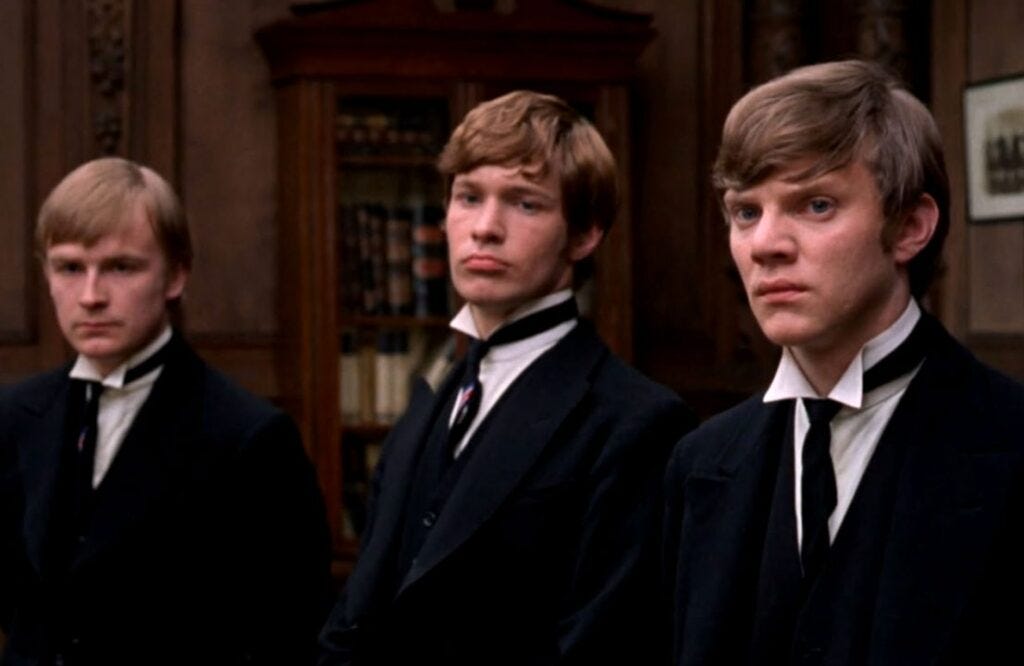
If… (1968) Paramount Pictures
In If…, he was the idealist turned revolutionary, a schoolboy who burns down the system. In A Clockwork Orange, he was a boy who burns down the world for pleasure.
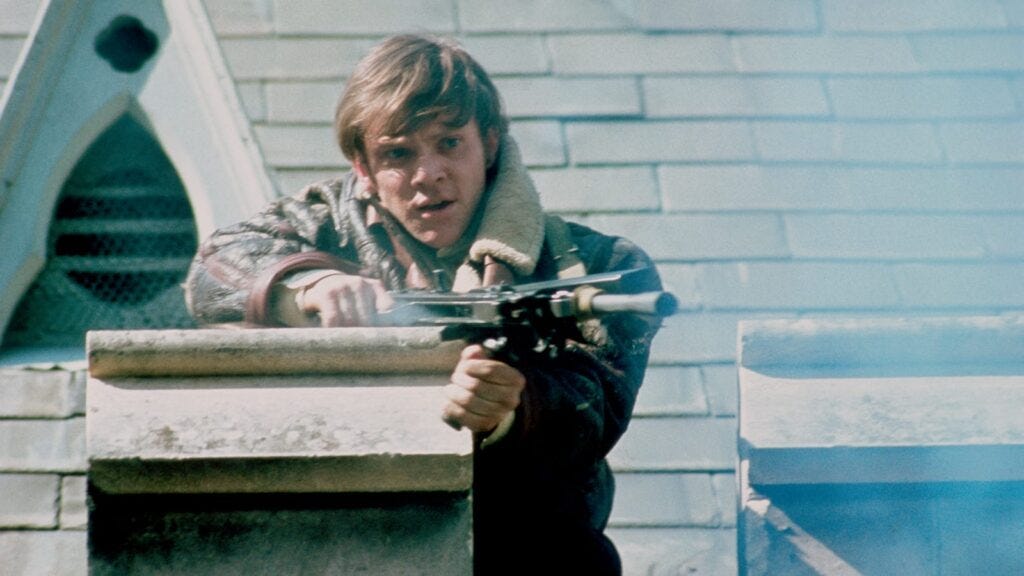
If… (1968) Paramount Pictures
That transformation haunted me. The same youthful energy that once represented freedom now became corruption. McDowell played Alex with a purity of expression that made his evil feel real. He was frightening because he was so alive. When he looked down the lens at the start, breaking the fourth wall, I found myself smiling back. It was wrong, and Kubrick knew it.
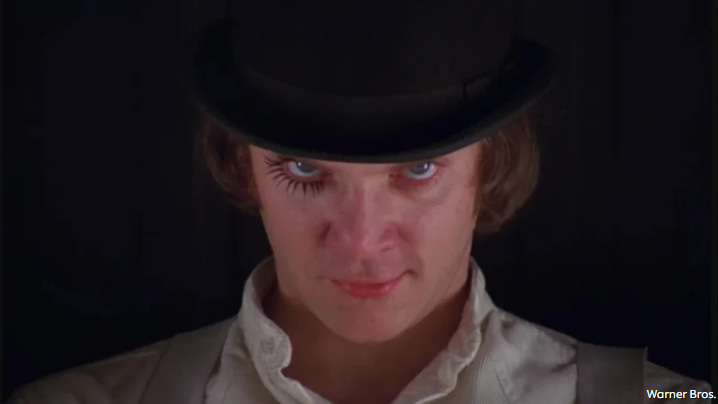
A Clockwork Orange (1971) Warner Bros
Kubrick filmed violence like ballet. Every strike, every act of cruelty, was choreographed with rhythm and symmetry. Beethoven’s Ninth Symphony swelled as Alex committed atrocities, and that pairing of beauty and savagery made it impossible to look away. It was art as a weapon. You could feel Kubrick asking whether we were drawn to the art or to the horror underneath it. The violence itself, compared to what modern audiences see, is almost tame. There are no slow-motion explosions of gore, no indulgence in blood. What makes it so powerful is the tone. Kubrick controlled every frame. The camera simply observes. That distance makes the film colder, but also truer. It leaves you nowhere to hide.
One of the film’s most infamous moments, the home invasion, was made even more chilling by Malcolm McDowell’s spontaneous decision to sing Singin’ in the Rain as he brutalised Patrick Magee’s character and raped Adrienne Corri’s. Kubrick loved it so much he bought the rights to the song on the spot. The scene distils everything A Clockwork Orange stands for: charm and horror fused, violence like theatre, and culture weaponised.
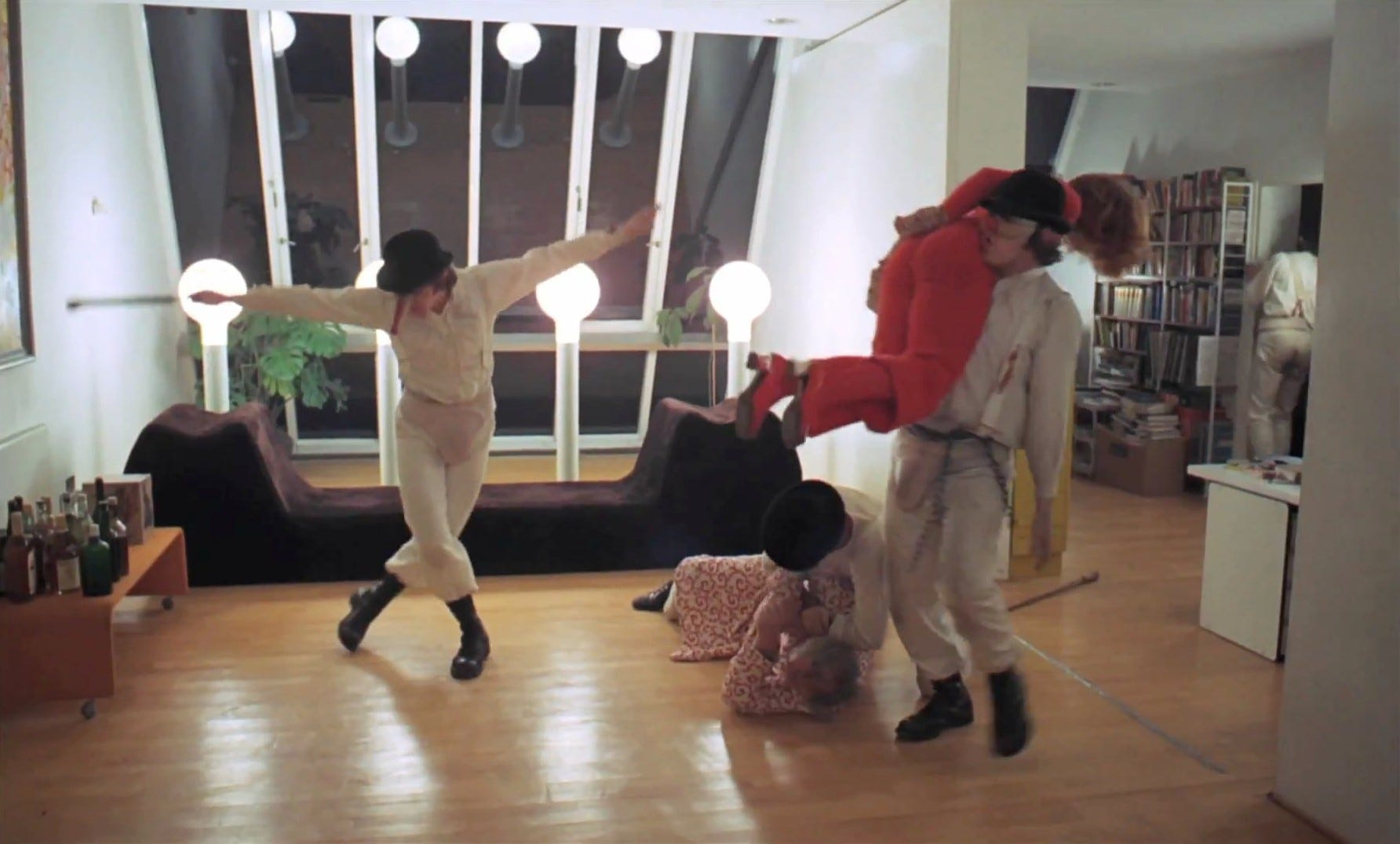
A Clockwork Orange (1971) Warner Bros
The turning point, for me, is not the early scenes of chaos, but the state’s response. When Alex is captured and subjected to the Ludovico Technique, the audience faces a new kind of horror. He is forced to watch films of violence while his body is conditioned to reject them. His free will is erased. He cannot even defend himself when attacked. What was once choice becomes programming. Kubrick flips the morality on its head, the monster becomes the victim, and the cure becomes the crime.
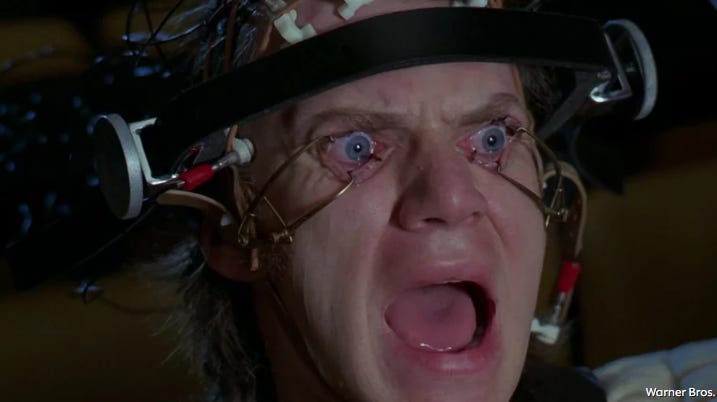
A Clockwork Orange (1971) Warner Bros
That final scene in A Clockwork Orange is where Kubrick’s cynicism reaches its purest form. Alex, broken and rebuilt by the state, lies in a hospital bed while the Minister of the Interior arrives like a doting parent. The same government that destroyed him now needs him. They feed him, flatter him, hand him a job. When the press pour in, Alex smiles and shakes hands, the model citizen reborn as the Minister beams beside him, a grotesque portrait of power rewarding depravity.
Kubrick’s parting shot is as cold as it is brilliant: Alex is restored to his natural state, enacting his signature ‘in-out, in-out’ with a woman while an approving audience, dressed in Victorian garb, looks on. Beethoven’s Ninth swells in triumph, his grin at the centre of it all. ‘I was cured, all right.’
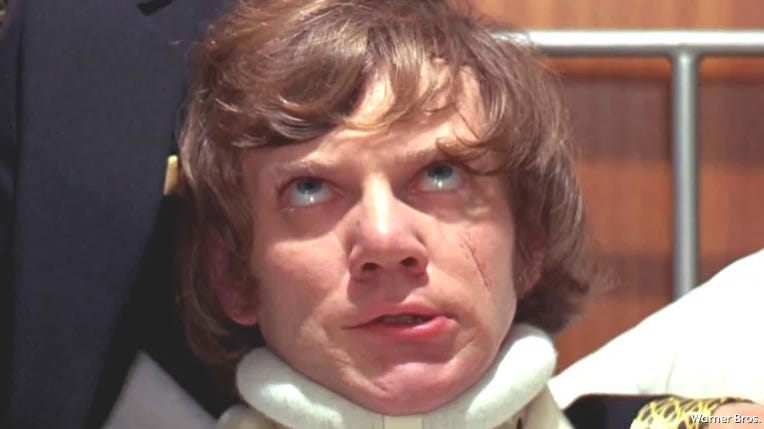
A Clockwork Orange (1971) Warner Bros
Stanley Kubrick told Michel Ciment (via The Kubrick Site): ‘The government eventually resorts to the employment of the cruelest and most violent members of society to control everyone else, not an altogether new or untried idea. In this sense, Alex’s last line, “I was cured all right,” might be seen in the same light as Dr Strangelove’s exit line, “Mein Führer, I can walk.”’ A cruel parody, and the audience is in on the joke.
What still fascinates me is how Kubrick doesn’t moralise. The film trusts the audience. It’s a mirror held to every government, every institution, every ideology that believes it can perfect the human spirit by removing its imperfections. That’s why A Clockwork Orange feels timeless. It’s about the arrogance of authority as much as it’s about the corruption of youth.
McDowell’s performance holds it together. You believe he truly feels something transcendent when he listens to Beethoven’s Ninth. That contradiction, culture and cruelty, is what makes him unforgettable.
For all its cruelty, A Clockwork Orange is not a hopeless film. It’s a warning. It shows how easily a society can destroy the very thing it means to protect. It asks whether order is worth the price of freedom. It asks whether art, beauty, and culture can still be trusted once they become tools of manipulation.
And here’s my controversial opinion. I think A Clockwork Orange is Kubrick’s best film. I hold it above 2001: A Space Odyssey and The Shining. It has the visual mastery of the first and the psychological intensity of the second, but it also has soul. Cold, corrupted, mechanical, but soul all the same.
My top three Kubrick films are:
A Clockwork Orange,
Barry Lyndon,
Lolita.
All three are about men and women pretending to be civilised while something animal claws beneath the surface.
It’s beautifully made and morally poisonous. It doesn’t ask you to like it. It asks you to think. I think that’s why it’s my favourite film. It makes me feel admiration and disgust in the same breath.
This brings me back to the end. A perfect end. Alex smiling, eyes full of madness. ‘I was cured, all right.’ He isn’t. None of us are. Perhaps that’s why I write grimdark.
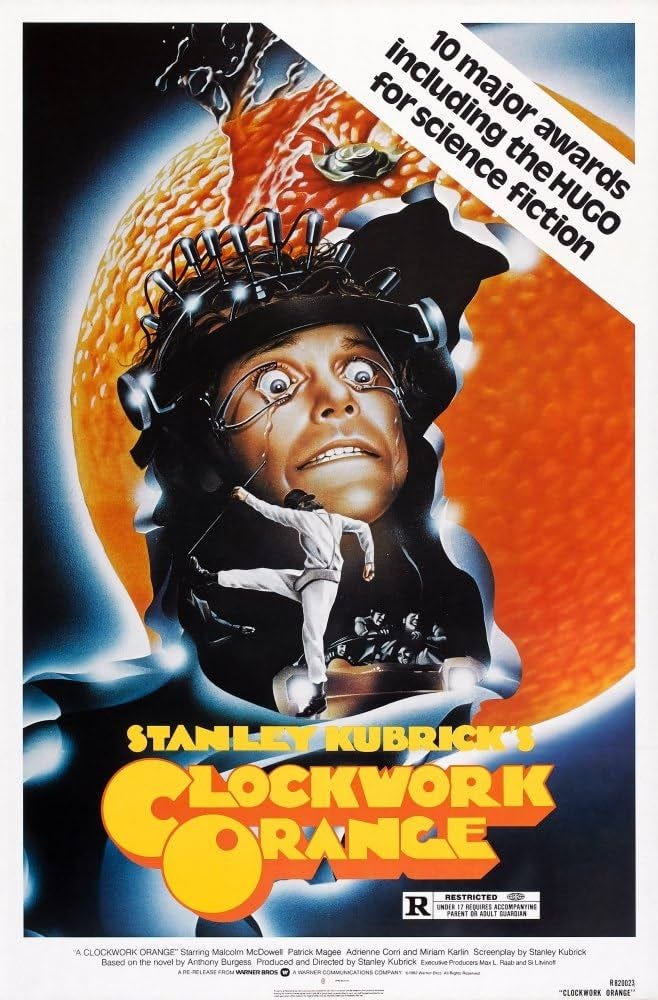
Image: Official theatrical poster for “A Clockwork Orange” (Warner Bros., 1971). Artwork by Philip Castle.
Thanks for restacking, guys.